big screens won for reasons.
phones became the place we read, navigate, watch, work, photograph, and message. more screen can make all of that feel better. apple’s current comparison still spans compact standard phones and much larger models, because there is no single ideal size.
the tradeoff is not visible in a product photo. it appears when you are standing on a train, carrying a bag, or answering a quick message with one hand.
smaller is not the only future.
some people will always prefer a pocketable phone. others will choose the biggest screen they can carry. foldables, wearables, voice tools, and better handoff between devices may add more choices, not one neat return to small phones.
that makes rigid interfaces less convincing. a control that assumes two hands and a fixed grip will still be awkward, whatever shape the next device takes.
make the interface adapt.
one-handed design is not anti-big-phone design. it is a way to keep a bigger phone useful in the quick moments that do not deserve a grip change.
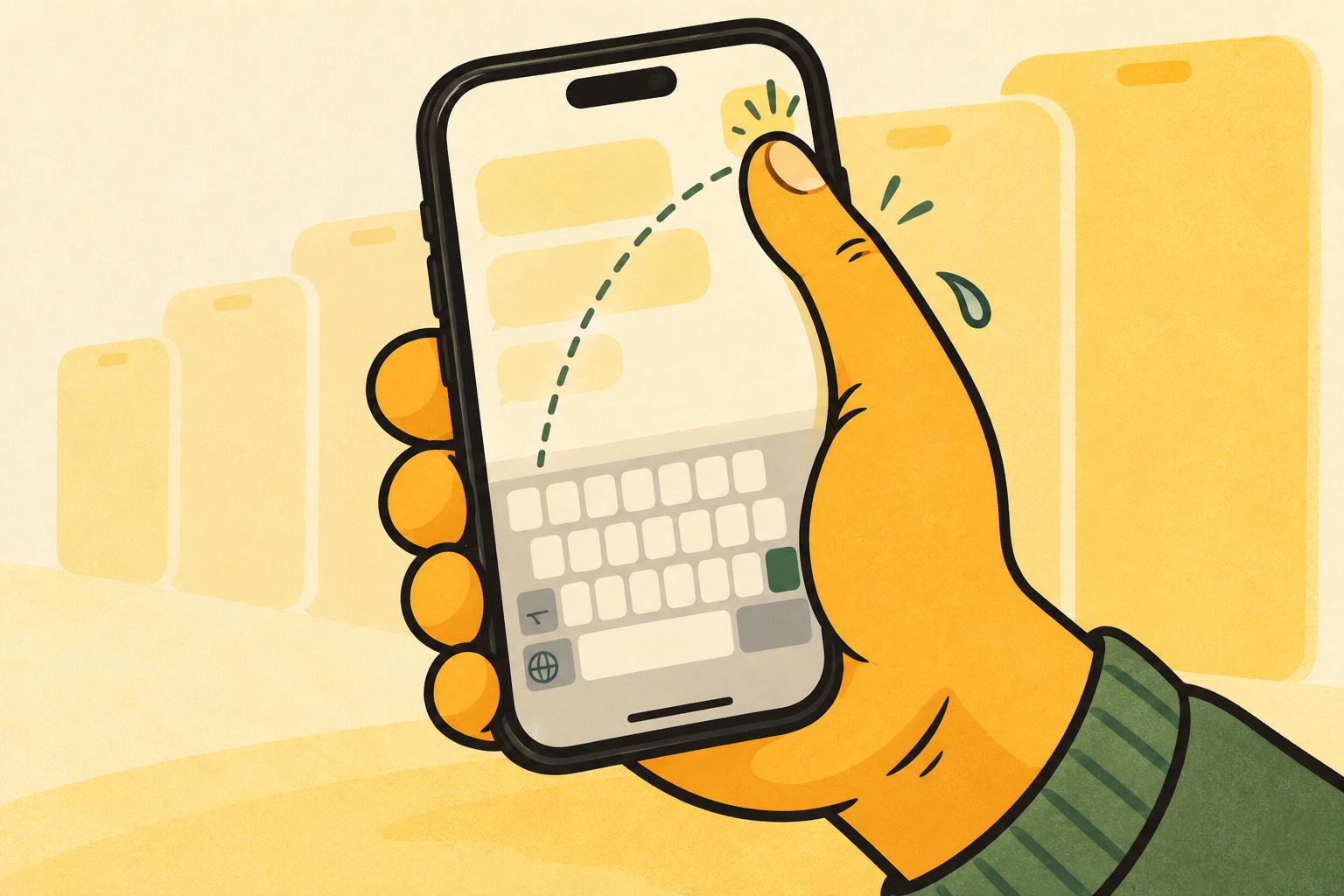
una mano takes the small part of the screen you use most for replies and lets it move left, centre, or right. the screen can stay large; the reach does not have to.
ask a better question.
instead of asking whether every future phone will become smaller, ask whether the controls you use can adapt to the device you choose. that is a question designers can answer now, without waiting for the next hardware category.
apple’s current range still includes notably different display sizes, and the wider market adds foldables and wearables to the mix. no one knows which shape will win every day, so a useful input tool should not depend on one perfect grip.
a future with more than one answer.
smaller phones may remain important. large phones will remain appealing. voice and wearable devices may take some quick tasks away from the phone entirely. none of that makes the one-hand problem disappear from the phone people carry today.
until it does, moving a keyboard toward the hand that is available is a modest, practical kind of future-proofing. it works with the screen you have instead of asking you to wait for a different one.
what stays constant.
the hardware will keep changing, but messages will still arrive when one hand is carrying something else. that is why the last inch of interface design matters: a small, adaptable control can have more daily value than a dramatic new interaction method.
the future may offer more screens, fewer screens, or screens that fold. people will still have a thumb, a grip, and a moment when moving the keyboard is easier than moving everything else.