muscle memory is useful.
qwerty is not perfect, but most of us already know it. when you are replying quickly, that familiarity is doing quiet work: your fingers know where to go before you have to think about it.
a new layout can be a great answer for some people. but if the letters are not the issue, relearning them can be more change than the moment needs.
the distance is the problem.
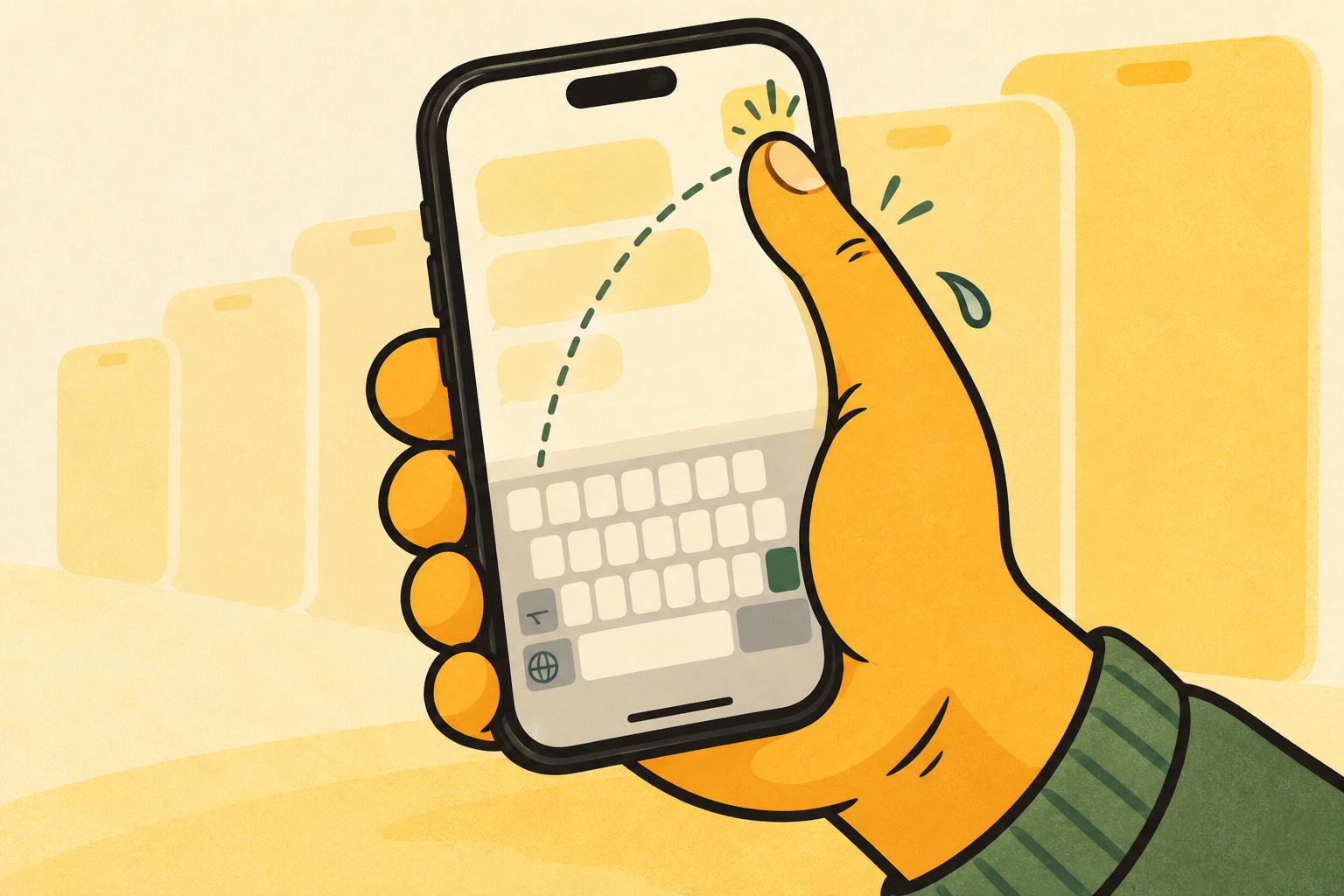
on a large phone, one thumb may be able to reach the near side of qwerty comfortably and the far side only by shifting the phone. that is a position problem, not a literacy problem.
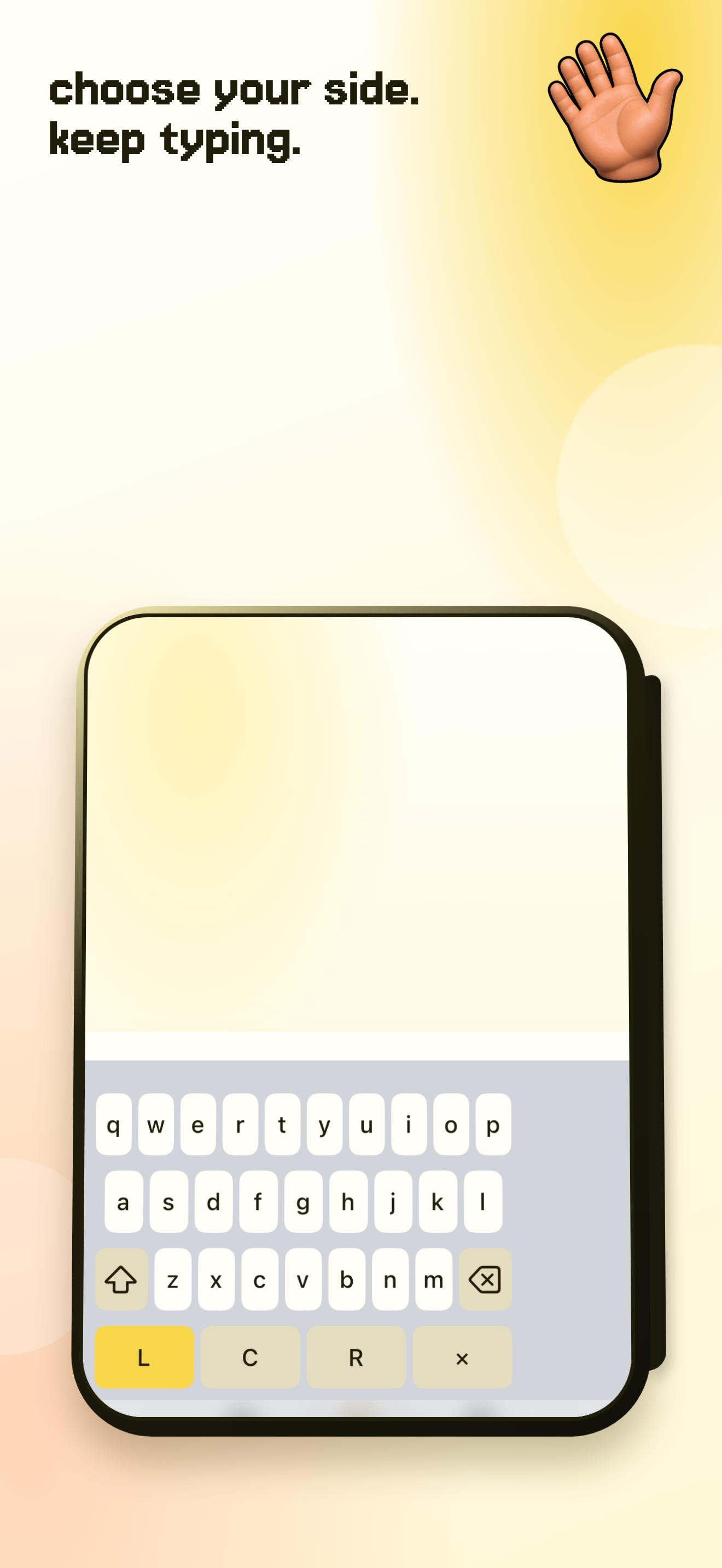
moving the familiar keyboard to the left or right shortens that distance. keeping a centre position also means you do not have to make a one-handed choice permanent.
change only what needs changing.
una mano leaves the layout familiar and moves the keyboard cluster. it is deliberately a small change, designed for the moments when you need to answer without putting everything else down.
if one hand is free, the best keyboard may simply be the one that comes closer to it.
why i built a position-first keyboard.
i did not set out to invent a new way to write on a phone. the everyday problem was much simpler: one hand was busy, the other thumb was free, and a full-width keyboard turned a quick reply into a grip adjustment.
that is why una mano begins with position. left, centre, or right are small choices, but they let the keyboard adapt without asking the person typing to memorise a new map of letters.
familiar is a feature.
a keyboard is one of the most practised interfaces on a phone. changing it can be worthwhile when it solves a real problem, but familiarity is not something to throw away casually.
for people whose frustration is reach, not prediction or language support, moving familiar qwerty can be the right-sized change. it lets the phone meet your thumb without making you start from zero.
make an honest choice.
a new layout, swipe input, or stronger prediction may be a better fit if those are the things slowing you down. keeping qwerty familiar is not a claim that every other keyboard idea is wrong.
it is an argument for matching the change to the problem. when the problem is distance, moving the keyboard can be more useful than rebuilding the way someone already knows how to type.